Glass Houses: What Happens When Your Creative Partner Knows Every Single One of Your Excuses
There's a version of creative partnership that looks really good on Instagram. Two people finishing each other's sentences, laughing at inside jokes, producing content that looks effortless. And yeah, some of that is real. But there's another version — the one that happens before the camera rolls — and it's a lot messier, a lot more honest, and honestly? Way more interesting.
When you work closely with another person over a long stretch of time, something shifts. They stop being just a collaborator and start being something closer to a witness. They've seen the projects that quietly died in a Google Doc graveyard. They've heard the pitch you were convinced was brilliant until you said it out loud. They know the difference between "I'm still developing the concept" and "I have absolutely nothing and I'm panicking."
That kind of visibility is a lot to sit with.
The Weird Vulnerability of Being Known
Most creative people have a carefully maintained public-facing version of themselves. You curate what you share, you time your announcements strategically, and you definitely don't broadcast the three weeks you spent convinced you'd lost your voice entirely. Solo creators get to manage that narrative almost completely on their own.
In a two-person setup, that control evaporates pretty fast.
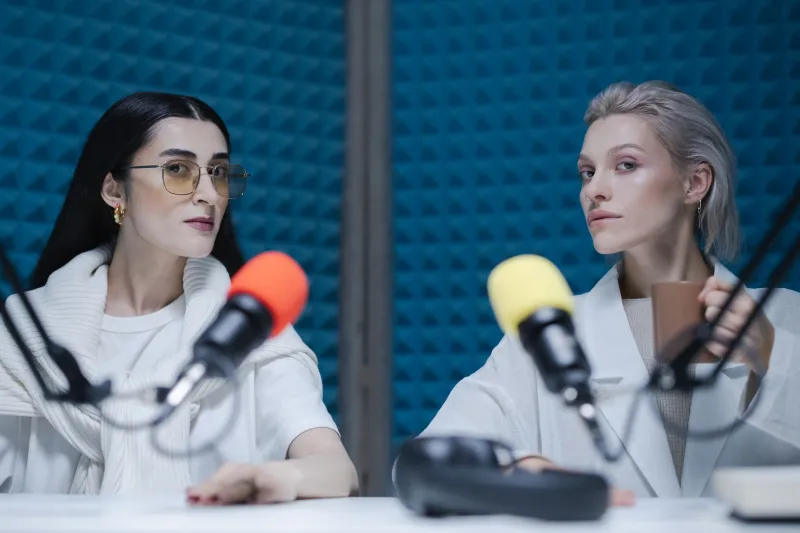
Rebecca and Ellen talk about this a lot — not always on the record, but in the way that it shapes how the whole operation runs. When you're building something with another person, you can't really hide the rough edges. The failed episode concept from six months ago? Your partner remembers it. The week you were so in your head that you rewrote the same intro four times? They were there for all four drafts. There's no version of your creative process that exists in a vacuum when someone else is embedded in it with you.
For a lot of people, that feels threatening. And honestly, the first instinct isn't wrong — it is exposing. But what happens after that initial discomfort is where things get genuinely interesting.
Pressure That Doesn't Crush You
Here's the thing about being truly seen by a creative partner: it creates a specific kind of accountability that's almost impossible to manufacture on your own.
When you're a solo operator, it's relatively easy to quietly abandon the ideas that scare you. You can tell yourself you're "deprioritizing" something when really you're just avoiding the risk. Nobody's checking. Nobody's going to bring it up at your next brainstorm session with a raised eyebrow and a "so whatever happened with that thing you were working on?"
But when someone else knows your ambitions — the real ones, not the polished ones you mention in interviews — there's a low-level hum of accountability that follows you around. It's not the punishing kind, where you feel surveilled and judged. It's more like... you can't fully pretend you don't care about something when the other person watched you care about it intensely for six months.
That's a surprisingly powerful motivator. Not because you're performing for your partner, but because their memory of your own excitement becomes a resource you can actually draw on when your motivation dips.
How to Make It Work For You Instead of Against You
The difference between mutual accountability feeling like fuel versus feeling like a burden usually comes down to a few specific things.
Get explicit about what you actually want witnessed. Not everything needs to be shared in real time. Some ideas need to stay in your own head until they're ready to breathe. But when you do loop your partner in on something early and vulnerable, name that explicitly. "This is a half-formed thing and I need you to hold it gently" is a completely legitimate thing to say to someone you trust creatively.
Build a culture of the unfinished draft. One of the healthiest things a creative duo can normalize is showing each other genuinely bad first attempts without the apologetic preamble. When sharing messy work becomes routine, it stops feeling like a confession and starts feeling like just... part of the process. Rebecca and Ellen have talked about how some of their best content came out of something that initially looked like a complete disaster. The rough draft isn't the failure — treating it like one is.
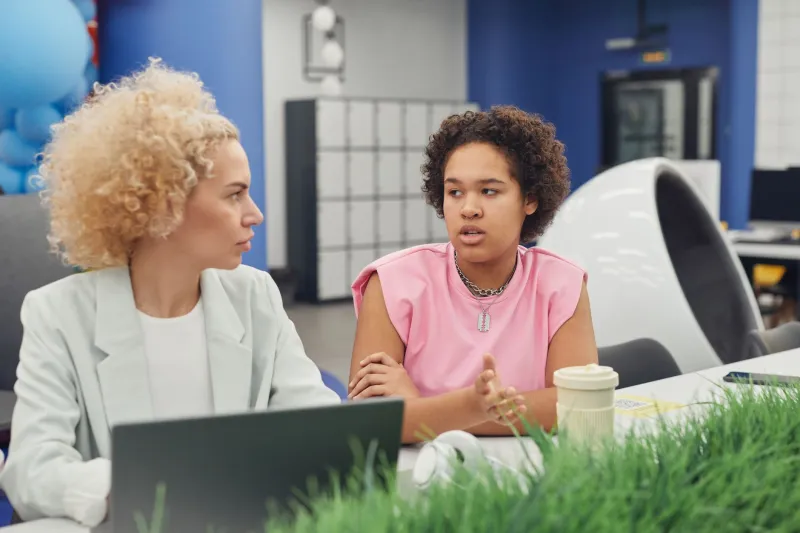
Use their knowledge of your patterns as data, not judgment. Your creative partner has probably noticed things about how you work that you haven't fully clocked yourself. Maybe you always stall right before you're about to do something new. Maybe your "I'm not sure about this" face actually means "I love this but I'm scared." That kind of pattern recognition, when it's offered with care, is genuinely valuable. Let it be useful rather than defensive.
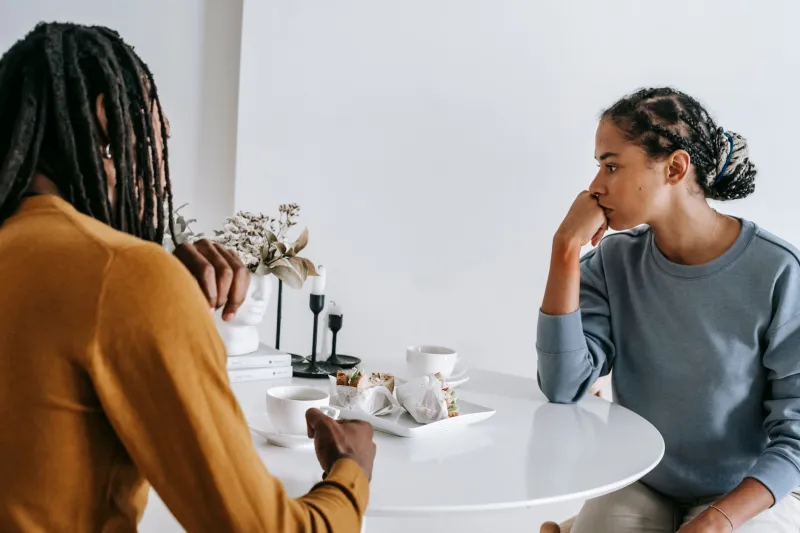
Check in on the dynamic itself, not just the work. The accountability loop between two creative partners can quietly tip into something lopsided if you're not paying attention. One person might start over-explaining their choices preemptively, trying to get ahead of perceived criticism. The other might pull back on honest feedback to avoid conflict. Neither of those is great. A quick, honest conversation about how the dynamic feels — separate from how the project is going — can reset a lot.
The Upside Nobody Really Talks About
Here's what gets lost in conversations about creative vulnerability: being deeply known by someone who's invested in your success is actually kind of rare. Most people in your life either don't fully understand what you're building or aren't close enough to the work to really track it.
Your creative partner is neither of those things. They're someone who has context, who has history with your ideas, who knows what you were going for even when the execution didn't land. That's not a liability. That's one of the most valuable things a creative person can have access to.
The discomfort of being seen — really seen, not just the highlight reel — is real. But so is what's on the other side of it. When you stop spending energy on managing how your partner perceives your process and start actually trusting that they're in your corner through the messy parts, something loosens. The work gets a little freer. The risks feel a little more manageable.
Glass houses are uncomfortable to live in. But they're also pretty hard to hide in — and sometimes that's exactly the point.