Mics, Mayhem, and a Whole Lot of Opinions: Inside the Rebecca & Ellen Podcast Setup
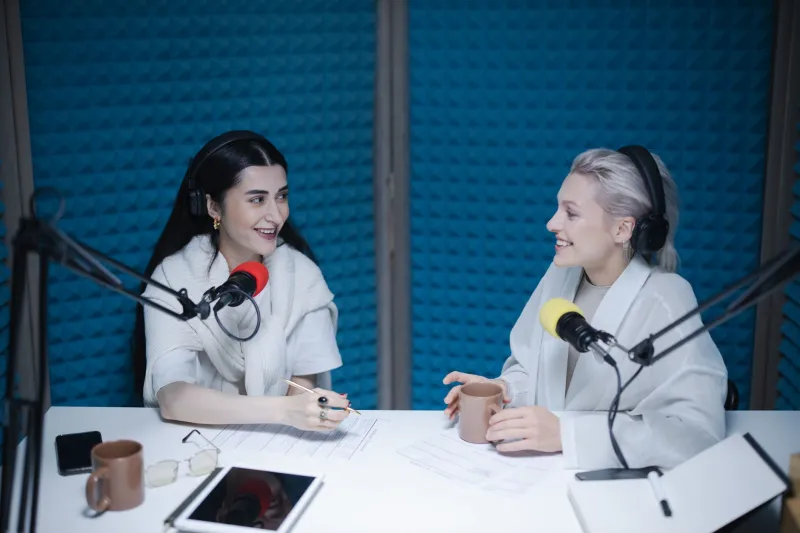
Let's be real: when people hear "two-person podcast," they picture two best friends laughing effortlessly into matching microphones while their audience grows by the thousands. And sure, sometimes it looks like that. But a lot of the time? It's one of us forgetting to hit record, the other one eating chips too close to the mic, and both of us arguing about whether that last segment was actually funny or just funny to us.
We've been doing this long enough now that we've figured out what works — and what absolutely doesn't. So if you're thinking about launching a duo show with your own partner in crime, pull up a chair. This is the no-fluff guide we wish someone had handed us on day one.
Getting the Tech Right (Without Losing Your Mind)
Okay, first things first: you do not need a professional studio to start. We didn't. What you do need is decent audio, and that starts with two separate microphones. This is non-negotiable. Sharing one mic makes everything sound muddy, and it forces you to physically lean toward each other every time you speak, which is as awkward as it sounds.
We use USB condenser mics — nothing wildly expensive — plugged into our own laptops and recorded on separate tracks. That last part is key. Recording on separate tracks means if one of us has a weird echo or background noise (thanks, neighbor with the leaf blower), it can be fixed in post without touching the other person's audio. We use Audacity for editing because it's free and honestly does everything we need.
For video recording, if that's your thing, a decent webcam or a smartphone propped up properly will get you started. Don't let gear anxiety stop you from launching. You can upgrade as you grow.
Finding Your Dynamic — And Actually Leaning Into It
Here's where the two-voice format either becomes your superpower or your biggest headache: personality chemistry. Rebecca and Ellen are not the same person. (Shocking, we know.) We have genuinely different tastes, different humor styles, and different opinions on things that probably shouldn't cause arguments but somehow do.
And that's the whole point.
A great co-hosted show isn't two people agreeing with each other for forty-five minutes. It's contrast. It's the push and pull. Audiences aren't just tuning in for the content — they're tuning in for the dynamic. Think about the shows you love. The hosts probably have distinct roles, even if those roles aren't formally defined. One's the skeptic, one's the enthusiast. One goes deep on research, one riffs off the cuff. Figure out who you each are in the conversation and stop trying to smooth out the differences.
Our advice: do a few test recordings before you go live. Not to perform, but to listen back and identify your natural rhythms. Where do you interrupt each other? Where does the energy dip? That self-awareness is worth more than any podcast course.
Handling Disagreements On Air
This one trips up a lot of duo hosts, especially friends or partners who are used to keeping the peace. What happens when you genuinely disagree on something mid-episode?
You lean into it — carefully.
Disagreement is content. It's interesting. But there's a difference between a lively debate that makes listeners feel like they're at the table with you, and a tense exchange that makes everyone uncomfortable. The key is tone. You can absolutely push back on each other, challenge each other's takes, even roll your eyes (audibly, which is a skill), as long as it comes from a place of mutual respect that your audience can feel.
We have a loose rule: anything that's genuinely bothering one of us off-air gets talked about off-air, before we hit record. The mic isn't a therapy session. Keep it fun, keep it real, but protect the show.
Keeping Your Audience Actually Engaged
Growing an audience as a duo show has one huge built-in advantage: two people means two networks, two social media presences, two sets of friends who get guilt-tripped into sharing episodes. Use that.
Beyond the basics of cross-promotion, think about how you engage with listeners in a way that reflects your dual-voice brand. We love asking our audience to weigh in on our debates — "Who was right? Drop it in the comments" is such a simple call to action, but it works because people genuinely want to pick a side. Give them that opportunity.
Consistency matters more than frequency, by the way. A weekly show that actually drops every week builds more trust than a daily show that goes quiet for three weeks. Pick a schedule you can both realistically commit to and protect it.
The Stuff Nobody Talks About
Running a creative project with another person is a relationship. It requires communication, compromise, and occasionally one of you just saying "fine, we'll do it your way" even when you think your way is clearly better. (It's usually Rebecca who concedes. She says she's being generous. Ellen says she's just tired of arguing. Both are probably true.)
Build in time to check in with each other — not just about the show logistics, but about how you're both feeling about the direction, the workload, and the fun-to-stress ratio. Creative partnerships thrive when both people feel heard. When one person starts feeling like a sidekick instead of a co-host, things get complicated fast.
Also: celebrate the small wins. First hundred downloads. First listener DM. First time someone quotes your show back to you. This stuff is hard work. Acknowledge it together.
Ready to Hit Record?
If you've been sitting on a podcast idea with a friend, a partner, a sibling, or your coworker who you always end up in a two-hour conversation with anyway — this is your sign. You don't need perfect gear, a perfect plan, or a perfectly polished dynamic. You need a co-host you genuinely enjoy talking to, something worth saying, and the willingness to figure it out as you go.
That's basically how we started. And we're still here, still talking, still occasionally arguing about whether pineapple belongs on pizza. (It does. One of us is wrong about this.)
Two voices really can make something pretty great — as long as you're both actually showing up for it.