Flying Solo: What Really Goes Down When Half of a Duo Has to Tap Out
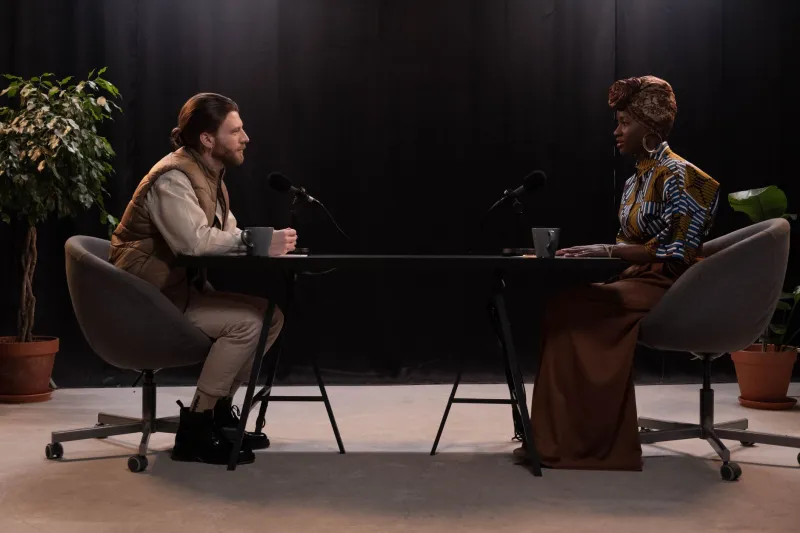
There's a version of this story that sounds cute. One of us wakes up with a scratchy throat, the other heroically holds down the fort, and we laugh about it later on a podcast episode titled something like That Time Rebecca Had Laryngitis. Adorable. Relatable. Great content.
The reality? Less charming. Way more stressful. And honestly, kind of revealing in ways neither of us expected.
Because here's the thing nobody tells you when you build something as a pair: you are, structurally speaking, one person short of a full team at all times. The moment one half drops out — even temporarily — you're not just down a person. You're down a voice, a perspective, a whole energy that the audience came to expect. And figuring out how to handle that without completely falling apart is its own skill set that we've had to learn the hard way.
When It First Happened, We Had No Plan
The first time one of us genuinely couldn't show up — and we're being deliberately vague here because some stories aren't ours to tell publicly — we realized pretty fast that we had no protocol. Nothing written down. No backup content queued. No "in case of emergency, break glass" folder sitting on a shared drive.
We winged it. And winging it, when you're two people who have built an audience around a very specific dynamic, is a particular kind of scramble. Do you delay? Do you go solo? Do you bring someone else in? Do you say anything to your audience at all, or do you just quietly post something and hope nobody notices the energy is off?
Spoiler: people notice. They always notice.
The Audience Knows Something Is Wrong Before You Do
This is the part that surprised us most. We thought maybe we could slide a solo episode or a slightly different format under the radar. We thought our audience was casual enough — engaged but not obsessive — that a missing presence wouldn't register as loudly as it did.
We were wrong.
Comments came in within hours. Not mean ones, mostly. Just... observant ones. "Is Ellen okay?" "Rebecca sounds tired, hope everything's alright." "This felt different today — just me?" It wasn't criticism. It was almost more uncomfortable than criticism, actually. It was people who genuinely cared, noticing a gap we'd tried to paper over.
What that told us is that the dynamic between two people isn't just a stylistic choice — it's the actual product. When you remove one element, you don't have a slightly diminished version of the thing. You have a different thing entirely.
Going Solo Is Harder Than It Looks
If you've ever watched a two-person comedy act where one person is suddenly doing a one-person show, you know the vibe. Something feels slightly unmoored. The rhythms are off. The pauses land wrong.
That's what it feels like from the inside, too. When one of us has had to carry content alone, the other person's absence is somehow louder than their presence ever was. You find yourself finishing a thought and then waiting — actually waiting — for a response that isn't coming. You make a joke and there's no one there to either back it up or shoot it down. The entire conversational architecture that makes the thing work just... isn't there.
It's also exhausting in a way that's hard to explain to someone who's never been part of a duo. Solo creators do this every single day, and we have enormous respect for that. But when you're built for two, running as one feels like driving a car with a flat tire. You can do it. You'll get somewhere. But it's bumpy and loud and you're very aware the whole time that something is wrong.
The Uncomfortable Question: Is Either of Us Actually Irreplaceable?
Okay. Here's where it gets real.
At some point during one of these absences, sitting alone in front of a camera or a microphone, you start to wonder: could someone else do this? Not in a self-pitying way. In a genuinely curious, slightly unsettling way. If we brought in a guest to fill the seat, would the audience adapt? Would they even care that much, as long as the content was good?
We've talked about this between ourselves, and we'll be honest — the answer is complicated. In a purely functional sense, yes, another person could sit in the chair. They could ask questions, react, riff, contribute. The format would survive.
But the specific chemistry? The particular way we push each other, the history behind every inside reference, the unspoken shorthand that makes certain moments land without either of us having to explain them? That's not transferable. A guest brings their own energy, and sometimes that's genuinely great. But it's not the same show. It's a remix of the show.
So are we irreplaceable to each other? Probably yes. Are we irreplaceable to the audience in some absolute sense? That's a harder question, and we're not sure we want to know the definitive answer.
What We've Actually Put in Place Since Then
After the first few times we got caught flat-footed, we got a little smarter about it. Not fully prepared — we're still Rebecca and Ellen, not a Fortune 500 crisis management team — but smarter.
We keep a small bank of evergreen content that either of us could technically present alone without it feeling weird. We've also gotten more comfortable being transparent with our audience when something's off. Turns out, "Hey, Ellen's dealing with something this week, so it's just me — bear with me" lands a lot better than trying to pretend everything's normal when it clearly isn't. People respond to honesty. They're rooting for you. They don't need the illusion of perfection.
We've also started having actual conversations — uncomfortable ones — about what happens if an absence is longer than a week. What if it's a month? What if something bigger happens? We don't have all the answers, but we've at least named the questions, which is more than we were doing before.
The Part That's Actually Kind of Beautiful
Here's the thing we didn't expect: absence, as brutal as it is operationally, has a way of clarifying things.
Every time one of us has had to step back temporarily, the other one has walked away with a renewed appreciation for what the duo actually is. Not just as a creative project or a brand, but as a relationship. A working partnership that's also a friendship that's also a creative entity that's also, weirdly, its own separate thing that neither of us fully controls.
When you can't have something for a minute, even something you see every single day, you remember why you chose it in the first place.
So yeah — the understudy problem is real. There's no clean solution. But maybe that's also the point. The fact that it's hard to replace either of us, even temporarily, is kind of the whole argument for why we're doing this as two people in the first place.
And when the other one comes back? Honestly, the content is better for a week. Absence, it turns out, is one heck of a creative reset.